


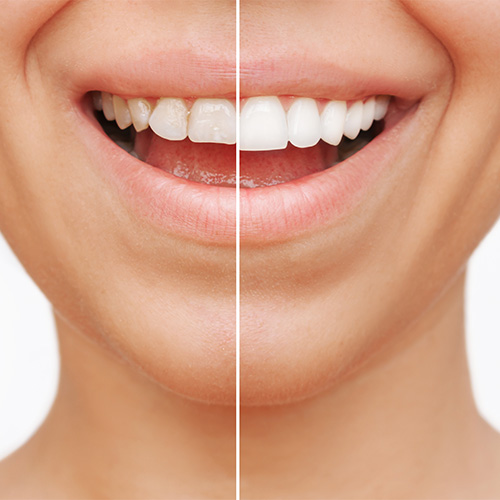
 Veneers are thin, tooth-colored shells custom-made to fit your teeth perfectly, providing beautiful, long-lasting results. Dental veneers may be recommended to correct a variety of imperfections, including:
- Gaps between your teeth
- Severely stained or discolored teeth
- Misshapen teeth
- Slightly crooked teeth
- Broken, chipped, worn, or fractured teeth
Contact Silva Dentistry at (915) 591-4303 to schedule your consultation with Dr. Benjamin Silva and determine if veneers are right for you.
How Veneers Are Applied
Dental veneers generally require two appointments to complete. During your first visit, our dentist will work with you to choose the correct shade of white for your veneers. Your teeth will be prepared, and an impression will be taken and sent to the dental lab.
Once your veneers have been created, you will return to Silva Dentistry for your second appointment. Our cosmetic dentist will place the veneers and check that they fit properly before bonding them permanently to finish your treatment and provide you with a result you can enjoy for 10 to 15 years.
Types of Dental Veneers
Veneers effectively address discoloration, large gaps, inconsistent tooth size, and minor chips. But did you know veneers come in different materials? Learn more about your options to determine which is best for your daily needs!
Porcelain
Porcelain veneers have become popular for their long-lasting durability. They last about 15 years before they need to be replaced. The process starts with an impression of your teeth to create a custom fit. Then, the front of each tooth is ground or buffed before being fitted and bonded. Porcelain dental veneers can come in different forms, such as:
- Stacked Ceramic: A hand–poured porcelain that mimics the color, shape, and transparency of your existing teeth.
- Pressed Ceramic: A thicker structure that requires more of your natural tooth to be removed or buffed down.
- Lithium Disilicate: Ideal for patients who grind their teeth, this form offers a greater level of durability.
- Zirconia: These veneers have a greater resistance to breakage and are ideal for patients with weaker teeth.
Composite Resin
Composite resin veneers are ideal for individuals seeking to conceal mild cosmetic issues, tooth fillings, and cosmetic bonding. It’s a cost-effective form of veneer that can resolve minor cracks, chips, and discoloration. A cosmetic dentist will apply the composite veneer by bonding a composite resin filling directly to the teeth, one tooth at a time. Then, they shape the resin into the desired shape and polish the material with a high-shine finish. Generally, composite resin veneers can last 5 to 10 years before needing to be replaced.
No-Prep
No-prep veneers like Lumineers, DURAthin, or Vivaneers, are a minimally-invasive dental veneer solution. Instead of removing your tooth’s enamel and part of the underlying tissue, a cosmetic dentist will only remove a small section of enamel to apply these veneers. Like porcelain veneers, no-prep veneers are custom-made. Once your custom set arrives, they’ll be fitted and bonded to your teeth and can last up to 20 years. However, non-prep veneers aren’t the right fit for everyone. Dr. Silva can let you know if they’re right for you.
Removable
Removable veneers, or pop-on or snap-on veneers, cover your natural teeth to hide imperfections. They can be compared to retainers, which can be taken out at any time. This option enhances your smile, but it can make it difficult to eat.
Frequently Asked Questions about Dental Veneers
How much do veneers cost?
A full-mouth set of composite veneers can range from $4,500 to $12,000 and $500 to $2,500 per tooth. It’s important to note that porcelain veneers are the most expensive. Speak to our team to discuss payment options and verify insurance coverage.
Which veneers look most natural?
Porcelain dental veneers are the recommended natural choice since they’re tailored to complement your natural tooth shade and perfectly blend in with the rest of your teeth.
What is the difference between veneers and crowns?
Dental veneers are a thin material adhered to the front of your tooth, while a dental crown covers your entire tooth, making it a thicker option. Crowns have an average lifespan of around 10 to 15 years.
Will my insurance cover dental veneers?
Your insurance may offer full or partial coverage if there is a medical benefit for needing veneers. Contact your dental insurance company for confirmation.
Reach Out for an Appointment
Visit Dr. Benjamin Silva, DDS, for exceptional dental care. You can contact Silva Dentistry online or call (915) 591-4303 to learn more about dental veneers or other cosmetic dentistry services!